
Notes
(04)
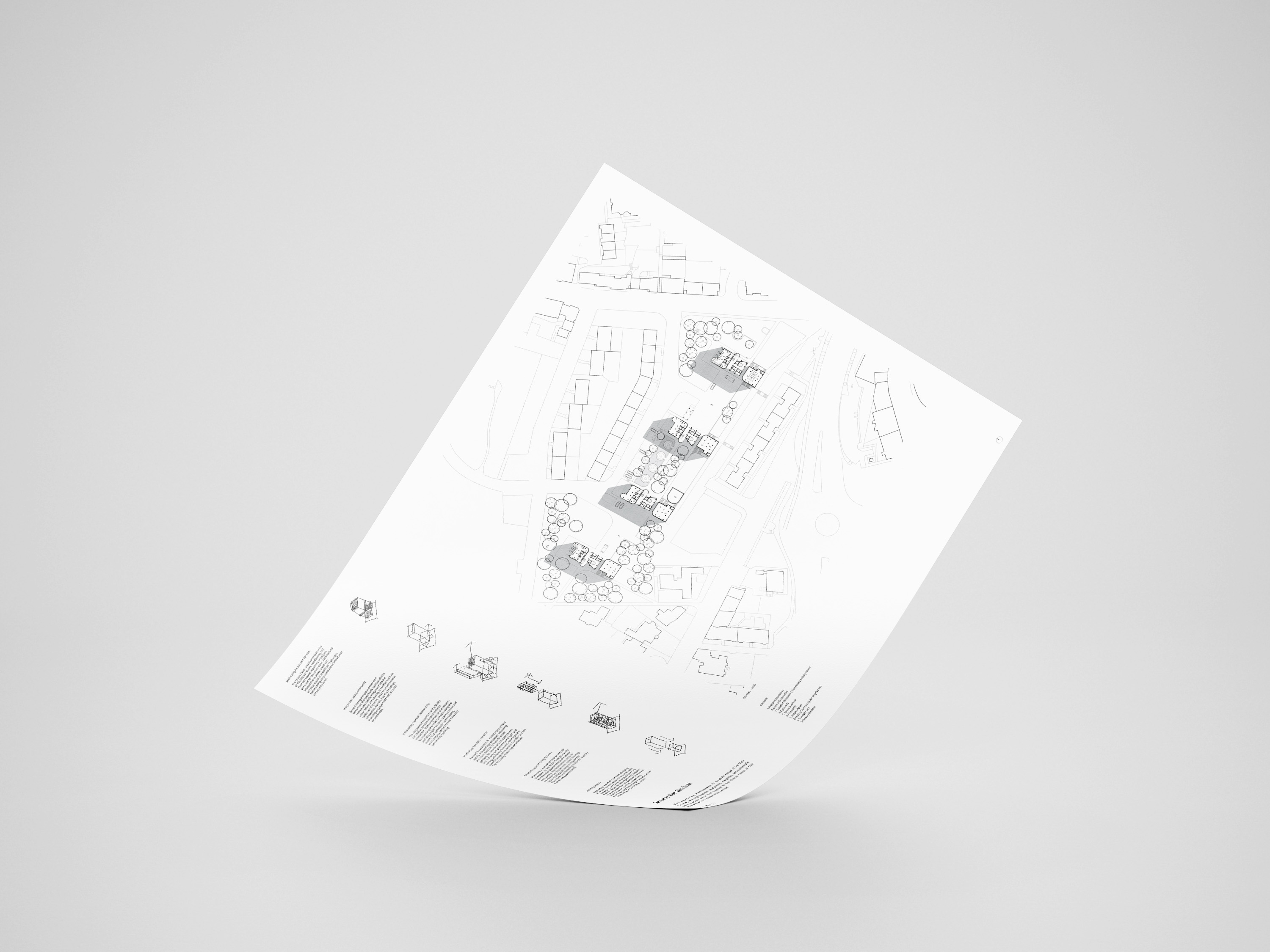
The hardest brief is an open one: a site with nothing on it, a budget that isn’t fixed, a client who says to do whatever you think is best. It sounds like the ideal conditions for good work. It rarely is.
When every option is equally available, none of them is indicated. You choose one, and the honest reason is that you liked it.
That reason has three problems. You can’t defend it, whether in a review, to a client or to yourself. You can’t improve it, because improvement needs a direction, and taste alone doesn’t give one. And you can’t tell it apart from the many alternatives you didn’t choose, so the project could have been almost anything.
A decision with no reasoning behind it is a preference, not a design decision.
A constraint removes options, and that is its value.
A beam that can’t move, a ceiling height you’re committed to, a window in the wrong place, a listed façade, a budget line that won’t stretch, a tree with a preservation order. Each one turns a matter of taste into a problem with a better and a worse answer.
The awkward element often becomes the strongest part of the finished project. The column that couldn’t be removed becomes what the room is organised around. The low ceiling in one bay becomes the part that feels sheltered rather than cramped. This happens too often to be chance. The obstacle forces a specific response, and specific responses are the ones people remember.
This is the part that seems backwards.
Given a free hand, most designers arrive at similar places. The cause is exposure rather than laziness: we see the same references, admire the same recent work and absorb the same defaults. Without constraints, taste drifts toward the current consensus, and the results are competent and interchangeable.
A real constraint moves you away from that consensus. It rules out the obvious answer and asks for a second one, which is usually less fashionable and more particular to the project. What reads as originality is often evidence that someone had a real problem to solve.
It is a large part of why working with an existing building is more rewarding than starting from nothing. The difficulty is what makes it rewarding.
Most briefs contain more constraints than they first appear to. They simply aren’t written down, because the client stopped noticing them long ago.
Before anything is drawn, it’s worth asking what can’t change, what has to stay, what has already been decided by someone else and what the budget actually is, rather than what it might be. The answers to those questions are the real brief. They say more than the wish list, which usually describes a solution rather than a problem.
If a project genuinely arrives without constraints, set some. Restrict the palette to three materials. Commit to keeping something. Set a limit and hold to it. An invented constraint is weaker than a real one, because it can be lifted the moment it becomes inconvenient, but it is still far better than none.
A blank page is a problem nobody has described yet.

